
Ihre Ansprechperson: Arjeta · Swiss Vibes travel expert for Menorca Cala Galdana
**Camí de Cavalls.** The coastal path around the whole island once served horses and lookouts who monitored the coast on behalf of the island's defence. You can walk any stages you like, usually between two coves, and jump into the water again and again along the way. The path is marked but has hardly any shade, and at pasture walls you cross over wooden gates. Rocky coast, pine forest and sandy coves alternate. Spring and autumn are ideal, and in high summer you set off early and swim over midday.
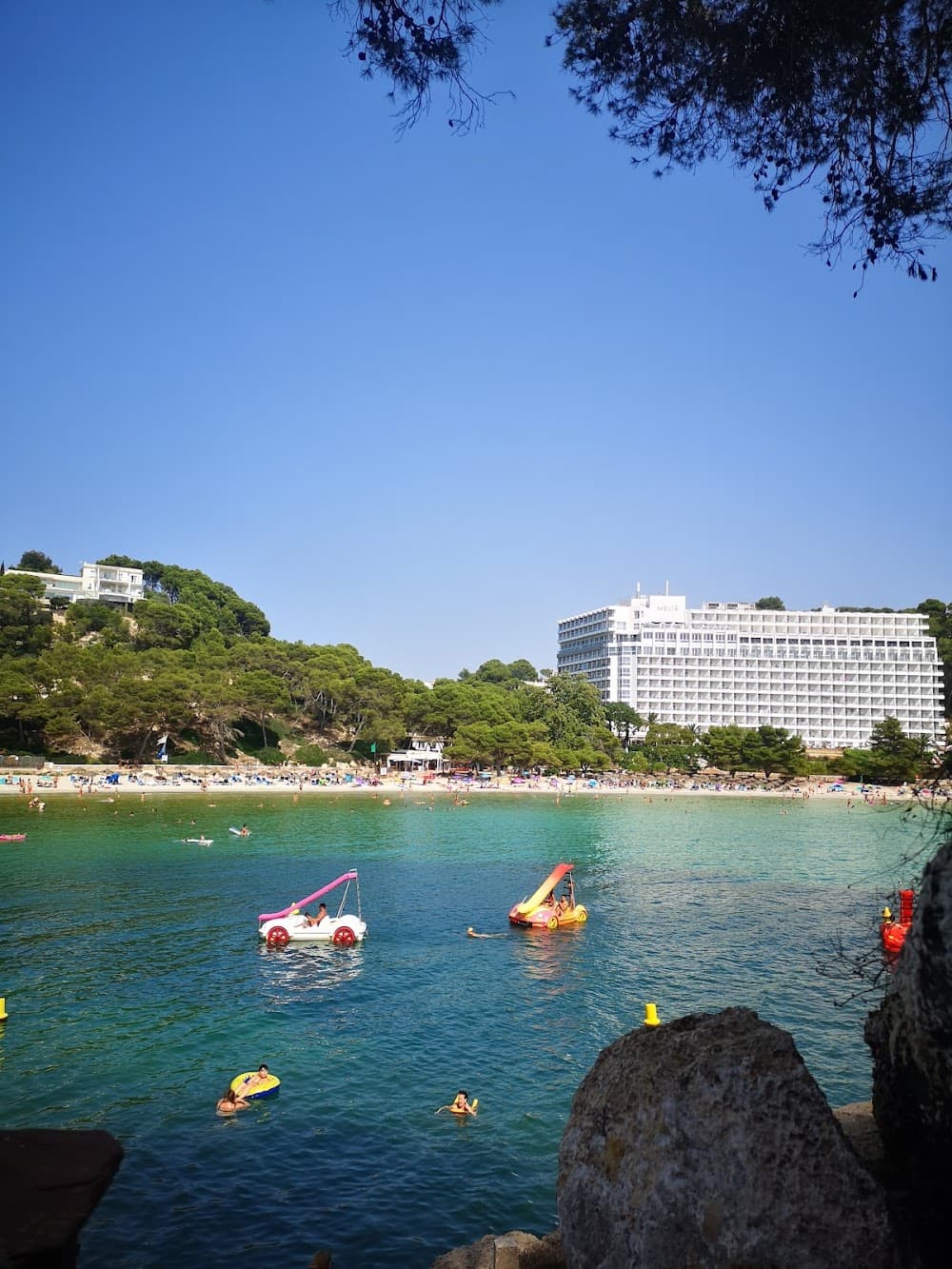
**Cala Mitjana and Cala Mitjaneta.** You reach the two coves in the south via a short footpath through pine forest, the water is turquoise and the sand fine. You can snorkel well along the rocks at the edge when the water is clear. In June and September it is still relaxed, while in the holiday season the car parks fill up early, so it is best to come in the morning.
**Cala Macarella and Macarelleta.** Two sister coves connected by a short path, with pines reaching down to the water. Macarelleta, the smaller cove, lies behind a rocky outcrop and is a popular spot for bathers seeking peace. You can park at the designated spaces above and walk the rest. If you come until the end of May or from mid-September, you will have considerably more space.
**Torre d'en Galmés and Naveta d'es Tudons.** Torre d'en Galmés is the island's largest talayotic settlement from the Bronze and Iron Ages, with towers, living quarters and a cistern. You drive there and follow a short circular path. The Naveta d'es Tudons near Ciutadella, a burial structure shaped like an upturned boat, is regarded as one of the oldest surviving buildings in Europe. In spring the fields around it are in bloom, while in summer it is better to go in the morning.
**Ciutadella.** The town was the island's capital until the 18th century and has a narrow natural harbour, palm trees on the town hall square and narrow lanes. Around 23 and 24 June the Feast of St John takes place, when riders in traditional dress make their horses rear before the crowd. You explore the old town on foot, and between May and October the harbour is the busiest spot. Fish restaurants sit side by side there, serving the catch of the day.
**Cap de Cavalleria and Cala Pregonda.** The north is more barren, with red-brown soil, wind and a lighthouse on the cliffs. You drive to a car park and walk the rest on foot. Cala Pregonda, with its reddish sand and the rocky islets off the shore, can also only be reached along a path. The evening light is good for photos, and in spring wildflowers bloom.
Experience Menorca Cala Galdana


**Binibeca Vell and Fornells.** Binibeca Vell was only built in the 1970s in the style of a fishing village, but its winding white lanes are still inviting for a stroll. Fornells in the north is known for its lobster stew tradition, the caldereta de langosta. You can combine both in one day by car, and it is most beautiful outside the high season.
**Es Grau and the Albufera.** In the north-east lies the nature reserve of the Albufera des Grau, with wetlands where migratory birds rest. Next to it lies Es Grau, a small fishing village with a shallow beach and the island of Illa d'en Colom off the coast. You walk on marked paths to a viewpoint above the water. Spring and autumn bring the most birds, and in spring herons and other waterbirds also rest here.
**Monte Toro.** The island's highest point lies in the middle near Es Mercadal. At the top stand a monastery and a viewing platform from which, on clear days, you can survey the whole island, from the north to the south. A road leads to the summit, so you do not need walking gear. It is best to come in the morning when the weather is clear.
**Mahón and the harbour.** The natural harbour of Mahón is among the largest in the Mediterranean. You stroll along the water and try gin, which the British introduced in the 18th century, along with the island's cheese. According to legend, mayonnaise takes its name from the town. A walk at sunset is worthwhile in spring and autumn.
**Getting there from Switzerland.** You can reach Menorca from Zurich, Basel or Geneva, either directly or with a connection depending on the season, and there is also a ferry connection from Mallorca. On site a hire car is worthwhile, because the most beautiful coves lie outside the towns. For July and August, secure the car well in advance.
Frequently asked questions
What is the Camí de Cavalls?
A marked coastal trail around Menorca that you can walk in any stages between coves.
When are the coves on Menorca quietest?
In May, June, September and October, especially early in the morning or in the late afternoon.
Do I need a car on Menorca?
For the coves and sites away from the towns, yes. You can also reach the two main towns by bus.
 Culture & Cuisine
 Party & Nightlife
 City Break
 Golf
 Family
 Bachelor Trips
 Corporate
 Women Only
 Solo