Ihre Ansprechperson: Ruth · Swiss Vibes travel expert for Pisa
**Pienza.** In the 15th century Pope Pius II had his birthplace rebuilt as an ideal city, which is why the cathedral and palaces stand around a harmonious square. The little town is known for its pecorino, the sheep's cheese, which you can taste in many shops. You reach Pienza by car, and you walk in the old town. In spring the Val d'Orcia is green, and in late summer golden.
**Bagno Vignoni.** In the village centre, instead of a square, lies a large Renaissance-era thermal pool wrapped in steam, in which you may not bathe. Just below the village the warm water flows over a rock face, where a small path leads down. You reach the village by car and walk through the few lanes on foot. In winter the steam is especially impressive, while in summer it is hot there.
**Cappella della Madonna di Vitaleta.** The small chapel with cypress trees on a hill is among the most photographed subjects in the Val d'Orcia. You reach it from the road near San Quirico d'Orcia along a farm track and walk the last stretch on foot. In San Quirico a stroll through the old town with its gardens is also worthwhile. The light is loveliest shortly after sunrise, and in May the fields are especially green.
**Crete Senesi and Monte Oliveto Maggiore.** South-east of Siena lies a landscape of bare, pale clay hills with isolated farmhouses, which in autumn and winter looks almost like a lunar landscape. The Monte Oliveto Maggiore monastery in a cypress wood shows frescoes by Signorelli and Sodoma in the great cloister. You drive along minor roads and stop at viewpoints. In spring the hills are green, and in late summer yellow.
**Montalcino and Brunello.** The hill town is known for the red wine Brunello, made from Sangiovese grapes. In the fortress above the town you can taste wine. In the surrounding area there are wine estates that you reach by car, and the panorama from the fortress ramparts extends far across the hills. The grape harvest in September and October gives the landscape a special light.
**Pitigliano.** The town sits on a tuff rock and, because of its long Jewish history, bears the nickname Little Jerusalem. Around the town lie the Vie Cave, deep paths dug into the tuff that lead to Etruscan tombs. You come by car and walk through the steep lanes on foot. In spring and autumn it is ideal for hiking.
Experience Pisa
Hotel Relais dell'Orologio
A restored 14th-century tower house near Piazza dei Cavalieri, a few minutes' walk from Piazza dei Miracoli.
Hotel Bologna
A long-standing four-star hotel near the Arno and Pisa's train station.
Grand Hotel Duomo
A four-star hotel roughly 50 meters from the Leaning Tower in Pisa's historic centre.
Lungarni und Ponte di Mezzo
The riverside promenades along the Arno and the central bridge that divides Pisa's old town into two halves.
 Experience
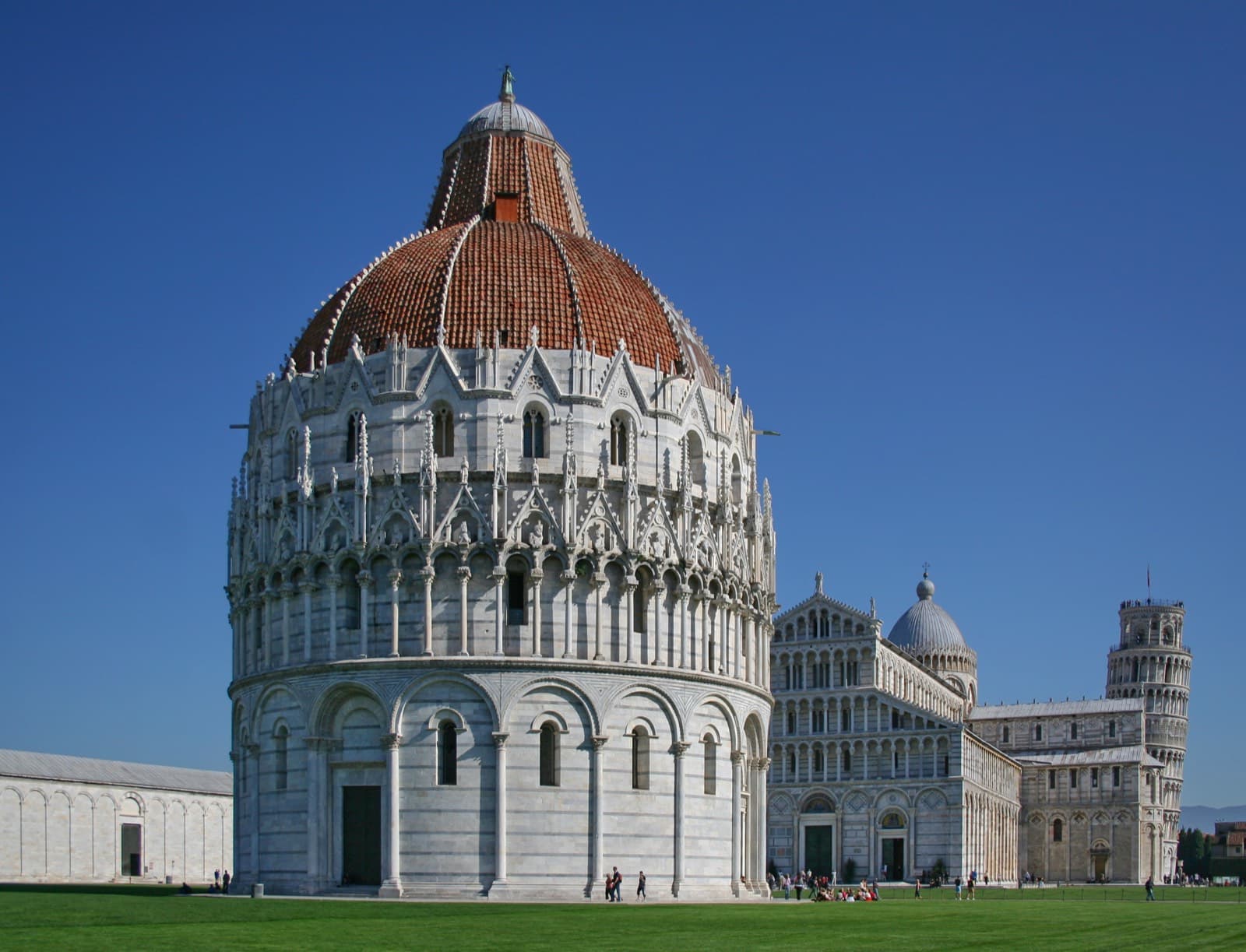
Battistero di San Giovanni
The largest baptistery in Italy, known for its special acoustics and the pulpit by Nicola Pisano.
 Experience
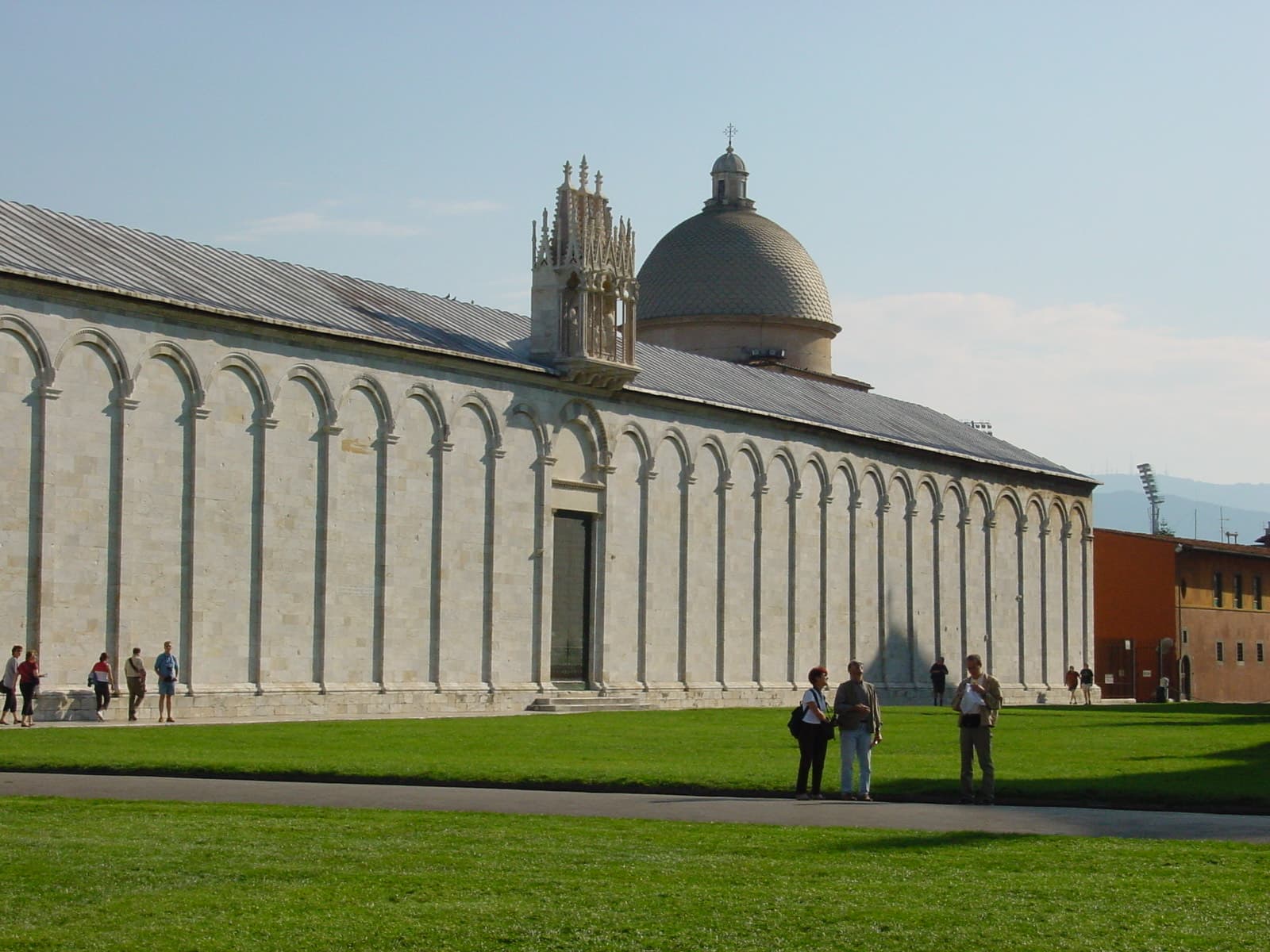
Camposanto Monumentale
Monumental cemetery at the edge of Piazza dei Miracoli, with a cloister and remains of historic frescoes.
**Sovana.** The tiny village consists of a few lanes, a cathedral and the square with the Palazzo Pretorio. The later Pope Gregory VII is said to have been born here. Outside lies the necropolis with the Tomba Ildebranda, an Etruscan tomb in the form of a temple with columns in the rock. You reach Sovana by car from Pitigliano, and you visit the tombs on foot along short paths. Spring and autumn are ideal.
**Saturnia.** The thermal springs of the Cascate del Mulino form freely accessible pools with warm, sulphurous water. You come by car, park and walk a few steps. In autumn and winter a bath in cool air is especially lovely, while in summer the pools are full. The water stays warm all year round. Take bathing shoes, as the ground is slippery.
**Bagni San Filippo and Monte Amiata.** On the slope of Monte Amiata, warm water flows over white limestone deposits into natural pools, known as Fosso Bianco. Access is free, and you walk from the car park on foot through woodland to a white rock formation called the Balena Bianca. The extinct volcano of Monte Amiata above has chestnut woods and, in winter, a ski area. In winter a bath in the cool air is especially lovely.
**Parco della Maremma.** The coastal park in the Monti dell'Uccellina protects pine woods, marsh and beach. Here the butteri, the Tuscan cowboys, still work, and Maremma cattle with long horns graze. You reach the park by car and walk on marked paths, and some sections are open only with a guide. In spring and autumn it is mild, while in summer the mosquitoes bite.
**Getting there from Switzerland.** Pisa and Florence are the most important airports, direct or with a change from Zurich, Basel and Geneva depending on the season. For the Val d'Orcia, the Crete and the Maremma you need a hire car, as public transport is sparse. In many old towns a traffic-restricted zone applies, so park on the edge. Talk to Swiss Vibes by video call if you want to plan a route with several stops.
Frequently asked questions
What is special about Bagno Vignoni?
On the village square lies a historic thermal pool that serves as the square. You may not bathe in it, but you may in the pools outside.
Can I bathe in Saturnia for free?
The Cascate del Mulino are freely accessible, and there are also thermal facilities that charge an entrance fee.
When are the Crete Senesi at their most beautiful?
In spring with green fields and in late autumn in the mist, when the hills are especially atmospheric.
 Culture & Cuisine
 City Break
 By train
 Roadtrip
 Winter & Ski
 Honeymoon
 Family
 Corporate
 Women Only
 Solo