Ihre Ansprechperson: Arjeta · Swiss Vibes travel expert for Sansibar
**Jozani Forest.** The national park in the middle of the island is home to the red colobus monkeys, which are found only in Zanzibar. You walk along wooden boardwalks through mangroves and coastal forest, and the animals can often be seen from close range. You can get there by hire car, taxi or dala-dala from Stone Town. Early in the morning the monkeys are more active and it is cooler. The monkeys are used to visitors but remain wild, so keep your distance and do not feed them.
**Stone Town.** The old town is a UNESCO World Heritage Site, with narrow lanes, mosques and elaborately carved wooden doors. On the site of the former slave market stands a church with a memorial that recalls the trade. The singer Freddie Mercury was born here. In the evening the Forodhani harbour park fills with food stalls. You explore on foot, ideally from June to October. Many doors carry brass studs modelled on Indian designs, a sign of the wealth of their former owners.
**Prison Island.** The small island of Changuu lies off Stone Town and is known for its Aldabra giant tortoises, which came as a gift from the Seychelles. The prison building was never used as a prison but later served as a quarantine station. You cross by boat from Stone Town in a short time. It is quieter in the morning. The animals eat leaves that you can buy on site, and some are more than a hundred years old.
**Spice farms.** Zanzibar has been regarded as the Spice Island since the 19th century, and the sultans brought cloves to the island from Oman. On a tour of farms in the island's interior you smell cinnamon, vanilla, nutmeg and pepper and taste fruit straight from the tree. You get there by taxi or on a tour that you organise on site or through your accommodation. From June to October it is pleasantly dry. Guides show how spices are processed into oil, tea or powder, and you can buy vanilla and cinnamon directly.
**Kizimkazi.** The fishing village at the southern tip is known for its dolphins, which live in the bay. Fishermen take visitors out; make sure the animals are not crowded. In the village stands a mosque with an inscription from 1107, one of the oldest traces of Islam in East Africa. You travel by taxi or hire car. The morning is best. You can see bottlenose and humpback dolphins, and the trip sets out early in the morning from the beach.
Experience Sansibar
 Hotel
Tulia Zanzibar Unique Beach Resort
Airy villas in a polished beachfront property offering an outdoor pool, a spa & open-air dining.
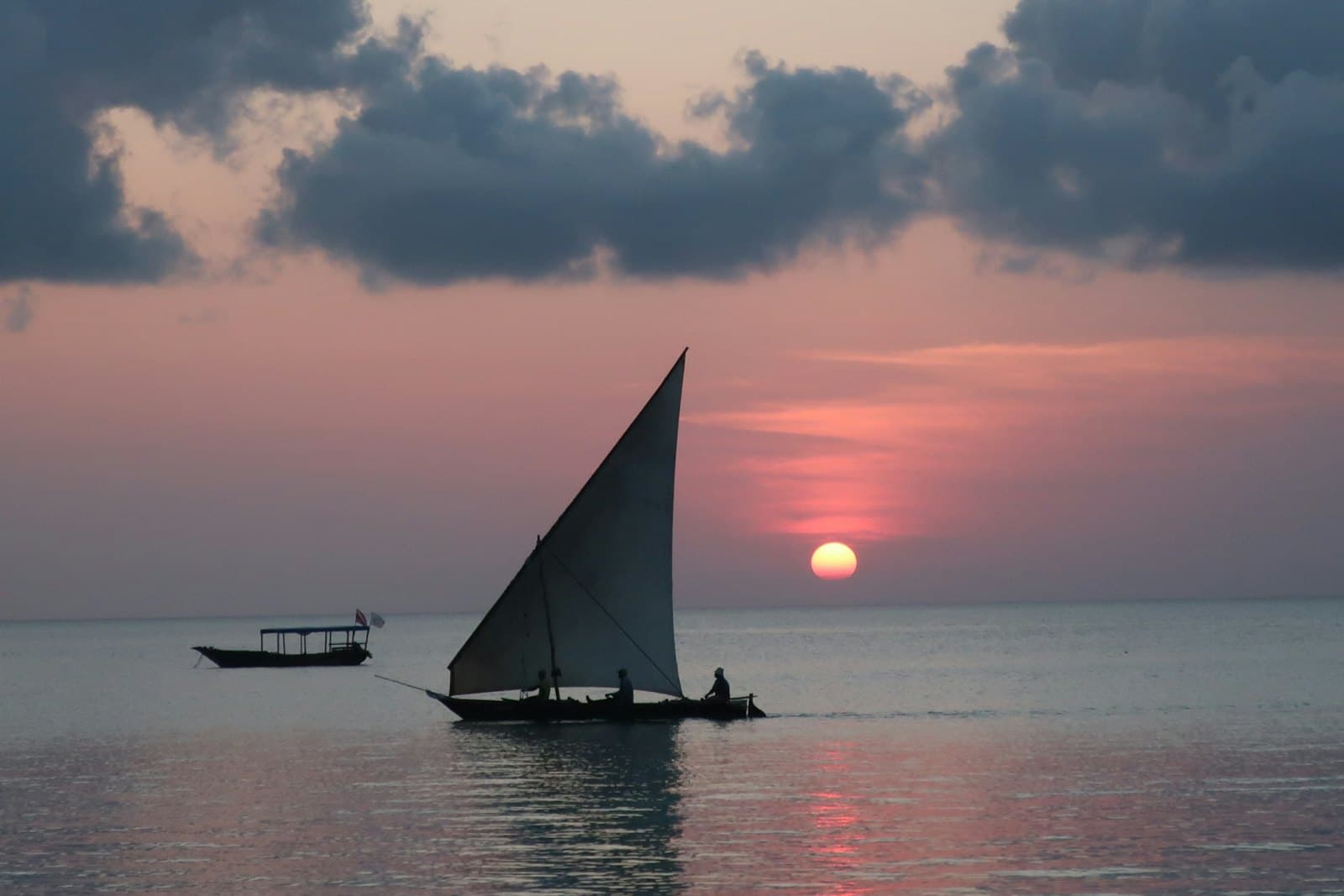 Hotel
Baladin Zanzibar Beach Hotel
Unfussy bi-level bungalows in a laid-back beach hotel with a restaurant, a bar & an outdoor pool.
 Hotel
Baraza Resort and Spa Zanzibar
Grand villas with private plunge pools in a luxe all-inclusive resort offering beach access & a spa.
 Experience
TO THE HILL KIDICHI SPICE FARM
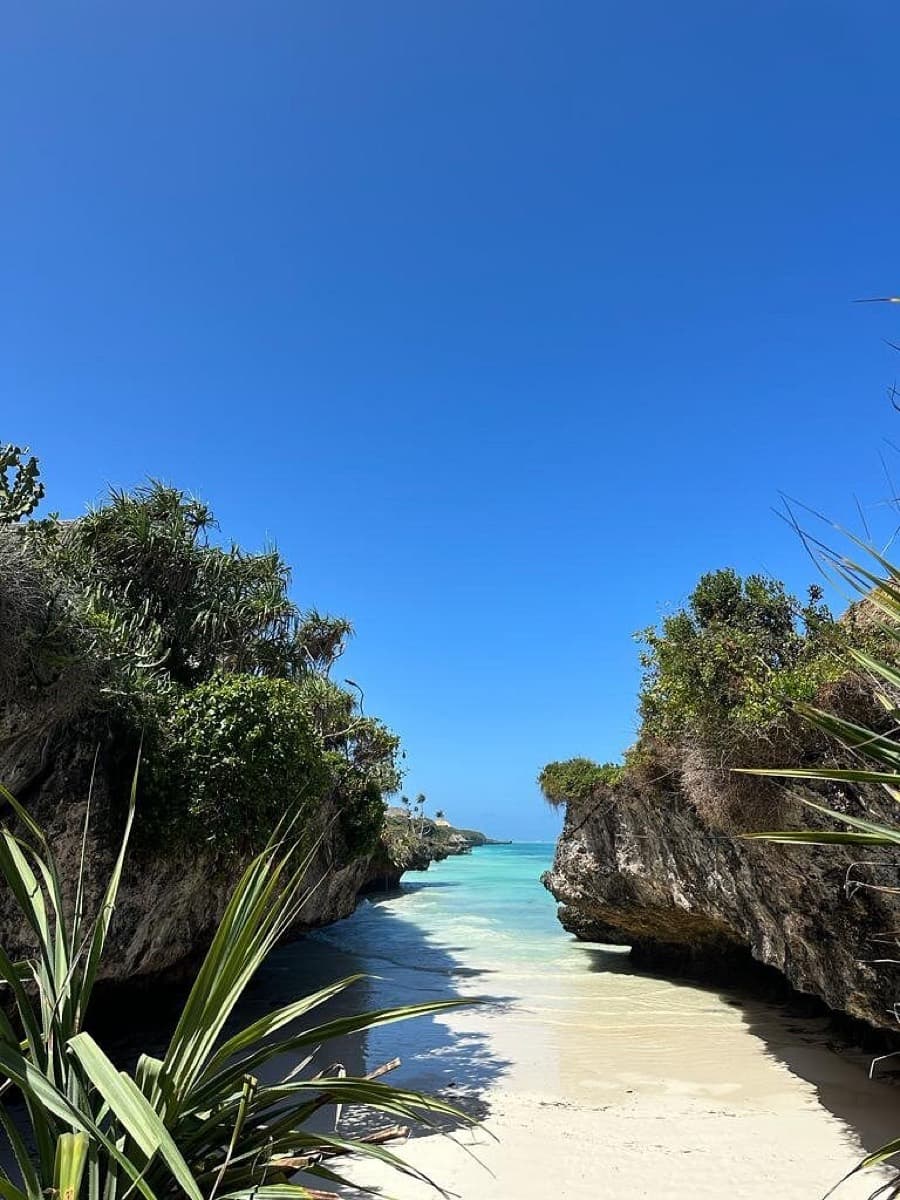 Experience
Mtende Beach
 Experience
Tazari Caves
**Paje and Michamvi.** On the east coast the sea runs far out at low tide, and women then gather seaweed on fields in the shallow water. In Paje there is kitesurfing when the wind blows, with palm trees behind. The Michamvi Pingwe peninsula is quieter and has broad white beaches. You travel by taxi or dala-dala. The tides determine when you can swim, so check the tide table beforehand. From the seaweed the women make soap and spice blends, which you can buy in small shops.
**Mnemba Atoll.** The small atoll off Nungwi has clear water and plenty of reef fish, including turtles and sometimes dolphins. You go out by boat and snorkel around the island. The island itself is private property and closed to visitors. Visibility is good from June to October, and the trip starts early in the morning. Dolphins often accompany the boats on the way out, especially early in the morning.
**Pemba.** The neighbouring island is greener and hillier than Zanzibar, with clove plantations, mangroves and dive sites. In the Ngezi Forest lives the Pemba flying fox, which is found only here. You reach Pemba by ferry or light aircraft from Zanzibar. Accommodation is simple and daily life is calm. The period from October to March is suited to diving. As a clove producer Pemba is even more important than Zanzibar, and the harvest falls in the second half of the year.
**Eating in Zanzibar.** Try urojo, a spicy soup with potatoes, mango and chutney, sold at street stalls. There is also octopus in coconut milk and the Zanzibar pizza, a filled flatbread. You buy fish in the morning at the fishermen's landing sites, for example in Stone Town or Kizimkazi. Freshly pressed sugar-cane juice with lime and ginger is available at many street stalls.
**Getting there from Switzerland.** Depending on the season, Zanzibar airport is served with a change of flight, via the Gulf region, Ethiopia or Nairobi. From there, transfers take you to the beaches. The long rainy season lasts from March to May, with a shorter one in November. Consultation with Swiss Vibes takes place by video call. You need a visa to enter Tanzania, so clarify the requirements before you travel.
Frequently asked questions
When is the best time to travel to Zanzibar?
From June to October it is dry, and from December to February it is warm. The long rains fall from March to May.
What are red colobus monkeys?
A species of monkey found only in Zanzibar, which can be seen easily in Jozani Forest.
How do I get to Pemba?
By ferry or domestic flight from Zanzibar.
 Safari & Wildlife
 Honeymoon
 Halal Travel